3D Procreate Models: A New Dimension for Digital Artists
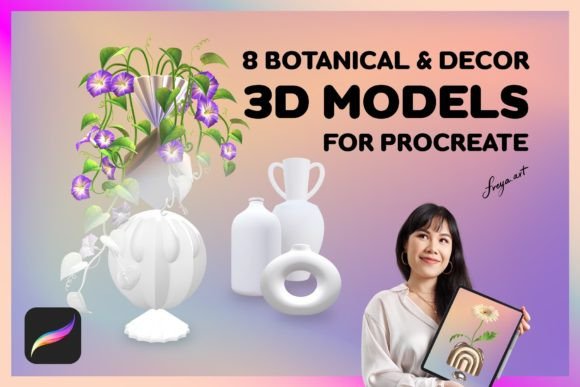
For digital artists using Procreate on iPad, the integration of 3D models can significantly enhance creative workflows. The set of 8 Botanical and Decor 3D Models for Procreate offers a unique opportunity to bring depth and realism to illustrations, designs, and concept art. These models are optimized for seamless use within the Procreate app, making them a valuable addition to any artist’s toolkit.
What Are 3D Procreate Models?
3D Procreate Models refer to three-dimensional assets that are specifically configured to work with the Procreate application. Unlike traditional 2D assets, these models allow users to manipulate objects in a more dynamic way, adding layers of complexity and visual interest to their work. The set of 8 Botanical and Decor 3D Models includes a variety of items that can be used across different artistic projects, from botanical illustrations to interior design concepts.
The models are designed with attention to detail, ensuring that they maintain high quality while remaining compatible with Procreate’s intuitive interface. This makes them particularly useful for artists who want to experiment with 3D elements without needing to switch to more complex software.
Key Features and Practical Value
The set includes 8 distinct 3D models, each tailored for specific artistic purposes. These include a range of botanical elements such as flowers, leaves, and vines, as well as decorative items like vases, frames, and ornaments. The diversity of the collection allows for flexibility in various creative scenarios, whether it’s for personal projects or professional assignments.
One of the standout features of these models is their compatibility with Procreate. They are optimized to work smoothly within the app, eliminating the need for additional plugins or complicated setup processes. This ensures that artists can focus on their creativity rather than technical hurdles.
Additionally, the models are designed to be easily integrated into existing workflows. Users can import them directly into Procreate and adjust their size, position, and orientation as needed. This level of control allows for greater customization and adaptability, making the models suitable for a wide range of artistic styles and techniques.
Real-World Performance and Usability
In practical use, the 3D Procreate Models demonstrate a high level of usability. Their lightweight file sizes ensure quick loading times, even on devices with limited processing power. This makes them accessible to a broad range of users, including those with older iPad models or less powerful hardware.
Artists who have used these models report that they add a new dimension to their work, allowing for more detailed and realistic compositions. For example, a botanical illustrator might use the flower models to create intricate designs that would be difficult to achieve with 2D tools alone. Similarly, a designer working on interior concepts could use the decor models to visualize space layouts more effectively.
The models also offer a consistent level of quality across the entire set. Each model is crafted with care, ensuring that details like textures, lighting, and proportions remain accurate. This consistency is crucial for maintaining a cohesive look in larger projects or when combining multiple models in a single composition.
Strengths and Limitations
A major strength of the 3D Procreate Models is their ease of use. Unlike many 3D modeling tools that require extensive training, these models are designed to be intuitive and user-friendly. This makes them an excellent choice for artists who are new to 3D design but want to explore its potential.
Another advantage is their versatility. The models can be used in a variety of contexts, from simple sketches to complex digital paintings. Their compatibility with other 3D software also adds to their value, allowing users to export and modify the models if needed.
However, there are some limitations to consider. While the models are optimized for Procreate, they may not offer the same level of detail or customization as more advanced 3D modeling software. Artists who require highly specific modifications may find that these models are not sufficient for their needs.
Additionally, the set is relatively small in terms of quantity. While 8 models provide a good starting point, users looking for a more extensive library may need to seek out additional resources.
Who Benefits Most from 3D Procreate Models?
The 3D Procreate Models are particularly beneficial for artists and designers who work with digital illustration, botanical art, or interior design. Professionals in these fields can leverage the models to enhance their work with added depth and realism, improving the overall quality of their output.
Freelancers and small business owners who rely on Procreate for their creative projects will also find these models useful. They can be incorporated into client work, such as branding materials, product designs, or concept art, providing a competitive edge in the market.
For educators and students, the models offer a practical tool for teaching and learning about 3D design principles. They can be used in classroom settings to demonstrate how 3D elements can be integrated into digital artwork, helping students develop a broader understanding of design techniques.
Recommendations and Final Thoughts
If you’re an artist or designer looking to expand your creative capabilities in Procreate, the 8 Botanical and Decor 3D Models are worth considering. They provide a straightforward way to introduce 3D elements into your workflow without the complexity of full 3D modeling software.
For those who are already familiar with Procreate, these models can serve as a valuable resource for experimenting with new techniques and styles. They are especially useful for projects that require a sense of depth, texture, or spatial awareness.
Ultimately, the 3D Procreate Models offer a practical solution for artists seeking to enhance their digital creations. Whether you’re working on personal projects, professional assignments, or educational materials, these models can add a new layer of creativity to your work. Their ease of use, quality, and compatibility make them a reliable choice for a wide range of artistic applications.